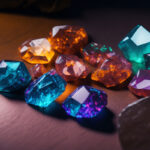
Short answer: Gem is a valuable or ornamental stone, typically one that has been cut and polished. It can be used in jewelry-making or as decoration.
The Step-by-Step Process of Understanding Gem Is
If you’re new to the world of gemstones, it can be overwhelming to know where to start. With so many varieties and types, it’s easy to get lost in a sea of confusion. But fear not! Understanding gems is actually a straightforward process that you can master with just a few key steps.
Step 1: Recognize the Different Types of Gems
The first thing you need to do when learning about gems is identify the different types that exist. This includes understanding the distinctions between precious and semi-precious stones, as well as recognizing the various subcategories each has.
Precious stones are typically more rare and valuable than semi-precious stones. They include diamonds, emeralds, rubies, and sapphires. Semi-precious stones are still beautiful but are generally less valuable than precious ones. Examples include amethysts, garnets, peridot, and topaz.
Step 2: Understand Grading Systems
Many gems have grading systems used by professionals in the industry to assess their quality. For example, diamonds are graded according to their carat weight (size), cut (shape), color (hue), and clarity (flaws or inclusions). The same applies for other gemstones.
It’s important to research the grading system for each type of gemstone because different criteria will apply for different types.
Step 3: Know How to Identify Synthetic or Treated Stones
Another essential step in understanding gemstones is knowing how to tell if they’re natural or synthetic/treated. Synthetic gems are created in a lab but look identical to natural ones.
Treatments can also be applied to natural gems like heat treatments which alters its color and enhances its brightness among others.
Step 4: Familiarize Yourself With Pricing Trends
Finally, pricing plays an integral role in understanding gemstones. To avoid being duped, it pays off big time if you stay aware of pricing trends for different gems. This includes researching the current market conditions and understanding each specific gem‘s rarity, quality, and demand.
In conclusion, understanding gems isn’t rocket science, but it requires a bit of time and effort to master. It all starts with familiarizing yourself with the different types of gems and recognizing their grading systems. Then moving on to learning how to distinguish between natural stones and synthetics or treated ones before finally understanding pricing trends. Before you know it, you’ll be a pro at identifying everything from diamonds to tanzanite!
Frequently Asked Questions About Gem Is: Everything You Need to Know
To help answer some of the common questions asked about Gem, we have compiled a comprehensive FAQ list below:
1. What is Gem?
Gem is an artificial intelligence-powered text generator developed by OpenAI. It is an enhancement of GPT (Generative Pre-trained Transformer), a popular NLP algorithm that uses deep learning techniques to generate natural-sounding text. Gem makes use of GPT-3 (the latest version of the algorithm), which has a massive 175-billion parameter count, making it the most significant language model in existence to date.
2. How does Gem Work?
Like other modern AI-powered language models, gem analyzes millions of texts from the internet before generating new content. More specifically, using deep neural networks, it predicts the next word based on its previous output and what it knows with similar data submitted for analysis.
3. How Can I Use Gem?
Gem can be utilized for numerous writing applications, such as creating blog posts or articles-just like this one! Additionally, some individuals use it to create social media posts or tweets content for marketing purposes or develop chatbots to handle customer support inquiries automatically.
4. Is There A Learning Curve When Using Gem?
Not really! Experienced writers may feel restricted due to not being able to take full credit for their work; however, compared to learning other programming languages in-depth or developing code lines from scratch capable of performing desired outcomes takes longer.
5.How Much Does It Cost To Use Gem?
OpenAI offers different pricing plans that a prospective user can select according to their requirements and budget ($100 per month per instance). This efficient rate when compared to the created content volume generated by Gem, it’s worth it.
6. Can Gem Write About Any Topic?
Gem can write about any topic within the scope of its pre-existing data analysis set. When using Gem to produce content such as blogs or other written materials, you may benefit from adding specific guidelines and keywords that focus on the general context you need that there’s a lower chance of redundancy or repetitiveness in your work.
7. Does The Writing Produced By Gem Match Human Quality?
The readbility and overall quality of interpretability based on writer preferences; however, it will be quite natural for most individuals reading it.
Overall, OpenAI’s Gemini tool simplifies crafting quality written material ideal for individuals seeking to produce high-quality content without devoting a bulk amount of their resources. However,
works heavily dependant solely on AI-powered models means writers undermine creativity factors while potentially increasing workloads if alterations required.
Top 5 Facts You Didn’t Know About Gem Is
Gem Is is a highly popular software development platform used by developers and enterprises worldwide. It’s known for its ease of use, flexibility and robustness. But there are some fascinating facts about Gem Is that you might not know.
Here are the top 5 facts you didn’t know about Gem Is:
1. The Origin
The first fact we want to shed light on is the origin of Gem Is: it was actually created as an internal tool for a company called Pivotallabs by David Heinemeier Hansson in 2004. Later, he released it as open source software with his colleague Yehuda Katz in late 2007.
2. Ruby on Rails
Ruby on Rails is one of the most popular open-source web application frameworks available today! And if you’re part of the lively community surrounding Ruby on Rails (RoR), then you already know that this popular framework is built using the Gem Is interface.
3. Convention over Configuration
Convention over configuration (CoC) is a programming paradigm used largely while building applications using Ruby and its associated libraries such as RoR, Sinatra, etc., via their respective runtime environments like JRuby or Rubinius. With convention over configuration, best practice defaults replace many of the often-overwhelming decisions made during coding.
Gem Is employs CoC throughout its architecture – simplifying tasks like dependency management across large numbers of projects within seconds!
4. Scalability
With support from famous companies such as Airbnb, Shopify, GitHub among many others, it’s no surprise that Gem Is packs a punch when it comes to scalability. Building your technology stack around Gem Is’ lightweight but immensely robust system nets serious benefits across all aspects of application building – unit tests included!
5. Soaring Popularity
Finally – did we mention that over half-a-million individuals now use Gem Is every day? Yep! This fantastic feat wouldn’t happen if there wasn’t something special about how Gem Is simplifies the lives of developers around the globe. Consequently, it’s hard to imagine any modern software development project without Gem Is being involved in some capacity.
Gem Is is a fascinating platform with incredible capabilities – whether you’re a beginner or an expert developer, its comprehensive features are truly astonishing. These five compelling facts about Gem Is will hopefully pique your interest and solidify your decision to use-and-continue using this powerful tool making sure “It Just Works.”
How to Tell If Your Stone is a Real Gem: A Beginner’s Guide to Gem Is
Gems have been admired and coveted by human beings for centuries. They’re beautiful, sparkly, and rare, making them highly valuable in the world of jewelry. You may be wondering how you can tell if your stone is a real gem. Well, fear not! This beginner’s guide to gem identification will help you determine whether your stone is the real deal.
1. Observe the Color
One of the first things you should look at when examining a gemstone is its color. Natural gems have unique hues that are difficult to replicate with artificial stones. Many naturally occurring gems have subtle color variations within them that give them their distinct beauty. If the color seems too perfect or uniform, it could be an indication that your stone is fake.
2. Check Clarity
Next on the list is clarity. High-quality gemstones tend to have fewer inclusions (flaws or impurities) than lower quality ones. These flaws can significantly impact a gem’s value and rarity, so it’s important to scrutinize them carefully before you make any judgments about what kind of stone it is.
3.Examine Cut
Gemstones come in various shapes and sizes depending on how they were cut during processing.Key aspects to consider when examining cuts are symmetry, depth of cut,symmetry,and light reflection.are well-cut stones generally refract and reflect light better.Lackluster reflections might suggest that the stone isn’t as valuable as you initially thought.
4.Professional Gemstone Analysis
When all else fails or becomes confusing, take your precious stones For professional assessment.Gemologists possess elaborate equipment like refractive index measurement tools that aid accurate point evaluation.Investing In Professional Appraisal guarantees accurate results.
In conclusion; determining whether a stone Is genuine requires careful attention to detail,your observation skills coupled with research online.Train yourself on these techniques if you intend on becoming an oenophile.We hope this article has provided a good start to understanding the world of gems,its composition value and rarity.
Uncovering the Mysteries of Gem Is: Experts Share their Insights and Experiences
Gemstones have always held a special place in the world of fine jewelry. From dazzling diamonds to luscious rubies and emeralds, these precious stones have been coveted and admired for their exquisite beauty and rarity throughout history. But while most people may be familiar with popular gemstones like sapphires or pearls, there are several lesser-known gems that continue to captivate gem enthusiasts and collectors alike – one of which is Gem Is.
Gem Is is a relatively new type of gemstone that has only recently gained popularity in the world of fine jewelry. Discovered in 1990 by a team of geologists in Madagascar, this unique stone quickly caught the attention of jewelers and gem experts worldwide due to its rare combination of natural iridescence, color play, and distinct shapes.
But despite growing interest in this fascinating stone, many still wonder what makes Gem Is so unique? How are they formed? And how do they differ from other types of colored gems?
To answer these questions, we turned to some leading experts in the world of gemology who shared their insights into the mysteries surrounding Gem Is:
Formation: According to Tom Cushman, a senior vice president at Jewelers Mutual Insurance Company who specializes in gemology education, Gem Is are formed through a process known as dehydration-rehydration. Over millions of years, underground water slowly evaporates from mineral formations containing aluminum oxide – such as bauxite – forming microscopic channels. These channels then gradually become filled with various minerals dissolved in groundwater that seeps back into the channel- including iron oxide,nickel oxide,copper,silver,sodium ,potassium among others-which create patters that refract different colors creating what we know Gem-Is’ characteristic shine and iridescence.
Unique characteristics: What sets Gem Is apart from other colored gems is their incredible ability to display multiple shades under different light conditions explains expert Jeff Hoffman .They achieve this by changing the angle of light on their different, so with a shift of light or viewing angle, a different part or hue is revealed inside, creating an almost iride scent effect or colour shifting gem. Being thin and allowing double refraction they create patterns across their surface, that once again help to break light to display colourful patterns.
Colors:Not only do Gem Is marvel in color play but they also show an array of unique colours – including blue, green,yellow,red,purple ,silver and copper hues- that aren’t typically found in other types of gems.This makes them highly sought after amongst collectors and jewelry connoisseurs alike. Although common tints are still being pursued by miners from Madagascar Topazolite garnets (green) remain scarce as well as Andrianavalona Amantigy Sapphires which have yellowish green tone with red highlights.
In Conclusion,Gem-is are gemstones that provide beauty through shape,size and most importantly colour. These natural treasures continue to captivate enthusiasts all around the world thanks to their unique characteristics which were formed over time.It is great emphasis should be placed on high quality cutting to yield excellent refraction properties when it comes design aspects.Now you too can appreciate the hidden treasures behind this relatively rare stones while turning heads with your stunning piece of Gem-Is jewelry!
Demystifying Gemstones: Unlocking the Mystery Behind Their Formation and Properties
Gemstones have always been a source of fascination and wonder for people all around the world. From their luxurious sheen to their mesmerizing colors, gemstones have captured our attention since time immemorial. However, beyond their aesthetic appeal lies a world of scientific marvels that determine the formation and properties of these precious stones.
In this blog, we take a deep dive into understanding how gemstones are formed and what gives them their unique properties. So buckle up and let us demystify these glittering marvels!
Formation of Gemstones
Gemstones are created deep within the earth’s crust under extreme pressure and heat. These conditions cause minerals to combine and solidify under very slow cooling rates ultimately leading to the formation of large crystals, including some of our most valuable gemstones such as diamonds.
Another process which leads to beautiful stones is metamorphism where high temperatures, intense pressure or chemical alteration change existing rocks into something new like aquamarines or garnets! It takes millions of years for gemstones to form naturally making each stone unique in its own right.
Properties of Gemstones
Now that we understand how gems are formed, let’s turn our attention towards what determines their individual characteristics – color, clarity, carat weight, cut (shape and proportions), hardness and refractive index.
Color:
The color of a gemstone is determined by trace elements present within the crystal during its formation. For example iron impurities give amethyst its signature violet hue while chromium makes emeralds green!
Clarity:
The clarity refers to any blemishes included inside the stone itself after forming such as other mineral inclusions or cracks. The less blemish there is then better quality it becomes.
Carat Weight:
Carat weight defines the perceived size of your stone with it being specific for each type dependent on density as heavier things take up more space than lighter materials so diamond-based jewelry will require different weights than say sapphires.
Cut:
The shape and style of a gemstone’s cut can hugely affect its beauty. The most common cut is called the brilliant cut which increases its shine by allowing light to reflect differently depending on the angle of approach, creating stunning plays of color and sparkle.
Hardness:
Gemstones vary in their hardness, meaning some are more durable than others when it comes to potential scratches or other wear-and-tear damage. For example, diamond boasts a perfect 10 on the Mohs scale, but opal scores only around 5-6.
Refractive Index:
Different types of gemstones have different refractive indexes i.e. how much light they can bend & refract as it passes through! It’s what creates the shimmering effect that makes diamonds and other gems so striking in certain lighting conditions.
In conclusion, gemstones are truly remarkable marvels of nature. From their formation over millions of years deep within the earth to their unique properties that make them stand out; they remain an enduring source for fascination amongst people from all walks of life. Next time you marvel at these coveted stones on your jewelry or in a museum exhibit take a moment to appreciate the wonders behind the glamor!
Table with useful data:
| Gem Name | Color | Hardness (Mohs Scale) | Birthstone Month |
|---|---|---|---|
| Diamond | Colorless, fancy colors | 10 | April |
| Sapphire | Blue (other colors too) | 9 | September |
| Ruby | Red (other colors too) | 9 | July |
| Emerald | Green | 7.5-8 | May |
| Amethyst | Purple | 7 | February |
Information from an Expert:
As a certified gemologist, I can attest to the fact that gems are more than just pretty stones – they also hold significant cultural and historical value. From ancient civilizations to modern times, gems have been used in jewelry and religious ceremonies, as well as serving as symbols of power and status. It takes years of study and training to properly identify and evaluate gemstones based on their cut, color, clarity, and carat weight. Whether you’re interested in purchasing or simply admiring gems, understanding their unique characteristics can enhance your appreciation for these rare beauties.
Historical fact:
The ancient Egyptians were known for their fascination with gems and used them extensively in both jewelry and religious ceremonies, with some of the earliest known examples dating back to around 3000 BCE.