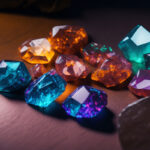
What are gems rocks?
Gems and rocks are two different things. A gemstone is a mineral or rock that has been cut and polished to enhance its appearance, while a rock is a naturally occurring substance made up of minerals. Gems can be found in some types of rocks, but not all rocks contain gems.
- Gems are highly prized for their beauty and rarity
- Gems can form in igneous, metamorphic, and sedimentary rocks
- The most common gemstones include diamonds, rubies, emeralds, sapphires, and pearls
So while gems may sometimes come from rocks, they should not be confused with the geological formations themselves!
How are Gems Rocks Formed? Exploring the Geology Behind Precious Stones
Gems and rocks are one of the most fascinating things found on earth, with their sparkling beauty and unique formations that can leave anyone in awe. These precious stones have been sought after for centuries as a sign of wealth, power, and status, but how exactly are these gems formed? What geological processes are responsible for creating these amazing natural wonders?
The process of gemstone creation starts deep beneath the Earth’s surface where intense heat and pressure cause chemical changes to occur within mineral-rich solutions. These solutions slowly begin to solidify over thousands or even millions of years forming crystals which eventually become gems.
One common way that gems are formed is through volcanic activity. When molten rock or magma rises through the Earth’s crust and cools down, it forms igneous rocks such as granite or basalt. Within these types of rocks, minerals start to grow from the cooling lava that hardens into crystals such as amethysts or quartz.
Another way gems form is through sedimentary rocks which include sandstones, limestones, shales among others. As particles settle at the bottom under water bodies like oceans or lakes over time they compact together due to immense pressure resulting in layers of rock being compressed tightly together called “sedimentary” formation. In some cases when sediments interact with fluids containing dissolved minerals may also fill fissures in blocks created by mountain building forces giving rise to veins yielding high-value minerals.
Lastly; metamorphic gemstones originate from preexisting rocks (igneous/sedimentary) exposed to extreme conditions during territorial movement caused by tectonic plate activities letting them undergo drastic physical/chemical modifications causing rock melting & recrystallization events widespread across connected regional cratons around our planet infusing elemental concentrations via geothermal fluid mixing episodically generating pockets packed richly ensuing eruptions en route towards eruption zones.
In conclusion; Although there many factors involved in transforming different kinds-of-stuffs into fine-looking precious stones – all gems share one thing in common. That they take time, patience and a whole lot of chemical activity to occur resulting into these magnificent geological miracles that have become symbols for the riches & luxury exchange sphere over centuries!
Are Gems Rocks – Step by Step: Examining the Process of Transforming Minerals into Valuable Gems
When considering the question of whether gems are rocks, it is important to understand the process by which minerals undergo transformation in order to become valuable stones. The journey from mineral to gemstone can be a long and complex one, involving various geological forces and chemical processes.
The first step in this process is the formation of minerals themselves. Minerals are solid substances that occur naturally and have unique chemical compositions and crystal structures. These can form through a variety of means, such as precipitation from solution or crystallization within magma.
However, not all minerals will necessarily become gemstones. To reach this level, they must undergo significant changes at the hands of geological forces like heat, pressure or even volcanic activity over millions or billions of years until they take on more desirable characteristics such as translucency, brilliance or rarity.
One example of this transformation is with diamonds- originally formed deep within Earth’s mantle 100 miles underground under immense pressure and heat that causes carbon atoms to bond into extremely hard crystals- then blasted up towards earth’s surface via volcanic pipes – whereupon cutters take those rough diamond crystals and change them into flawless sparkling jewels we commonly associate with engagement rings.
Other examples include creating colorless topaz by subjecting natural pale yellow specimens or white beryl aquamarine crystals (a silicate mineral similar to emerald) undergoing treatment with high-pressure steam for several hours giving them their characteristic greenish-blue hue.
Once these desired features emerge throughout the newly created gemoct some when discovered may still require further polishing-cleaning-cutting-grading often done using manual labor but sometimes assisted with modern machinery depending on specifics surrounding each particular stone.
All told this intricate process someone takes attributes formed across vast swaths time scale-local conditions resulting remarkable Jewels available modern day marketplaces found around world!
So while it might be tempting to think of gems simply as pretty rocks–that couldn’t be further from truth – What you’re getting underneath that surface is more valuable than mere rocks can ever be!
Gems vs. Rocks: The Ultimate FAQ on Differentiating between Various Types of Minerals
There is a lot of confusion surrounding the difference between gems and rocks. Many people confuse these terms, using them interchangeably to describe minerals that they collect or admire. However, there are significant differences between the two types of minerals that should be taken into consideration.
In this ultimate FAQ on differentiating between various types of minerals; we will explore what constitutes a gemstone versus a rock, explain their characteristics, compare their value in the market, and explore how faceting can enhance a stone’s value.
What is the difference between gems and rocks?
Gems are defined as precious stones or jewels with high aesthetic value due to specific optical properties such as color, luster, transparency or unique patterns. Some examples include diamonds, emeralds, rubies and sapphires. On the other hand Rocks refer to any naturally occurring mineral material composed of one or more crystals with no assigned itiquette value due to lack of aesthetical aesthetics like coal,gypsum,limestone etc
Characteristics that differentiate Gems from Rocks
Gemstones have long been prized for their striking beauty whereas rocks are valued primarily for usefulness in construction work (Statues) Gemstones usually have higher refractive indices than most non-gem materials which means they bend light at higher angles creating sparkly affects under light conditions.Rocks do not exhibit similar optics but possess qualities such as high density ,hardness,malleability,Uneven surface et al useful during construction works.
Value comparison – Rock vs Gems
The values associated with gemstones far outweighs those of rocks for reasons apart from rarity.Gems porperties like its occurances,mining difficulty,purity,cutting,facetting plays important role thus making so prices varies significantly.According to some resources,in 2018 an uncut diamond mined costs roughly $150 per carat.In contrast,Limestone,a common natural resource mostly used in constructions can cost around $50-60 per ton(needs verification).
Faceting and its effect on gemstone value
Faceting is the process by which a cut stone is formed to enhance beauty or increase clarity.Gemstones are faceted to allow light to pass through multiple surfaces within it,creating reflective effects inside that affects durability,cost and aesthetics of such precious pieces.It can have significant impact of more than 50% upliftment in price thus adding high importance for both domestic or professional procurement plans.
In conclusion,Gems and Rocks has always quite diverse characteristics when evaluated based on their natural aesthetical ,commercial,and industrial values. Regardless of preference each type offers varied benefits depending on purpose .Understanding these differences allows us to better appreciate their unique qualities thereby make informed decisions during purchase or procurement processes.Be educated,tactful and sensitive with your mineral preferences!!
Top 5 Facts You Need to Know about Whether or Not Gems are Considered Rocks
Gems and rocks are two wildly different things, yet they share something in common. Both of these items involve minerals. Technically speaking, a gem is simply a mineral that has been cut to be worn as jewelry or for aesthetic purposes while rocks refer to larger natural formations made up of various minerals.
However, the confusion between gems and rocks arises from some misconceptions that have surrounded them over time. Indeed, there are several facts about whether or not gems can really be considered as rocks that might surprise you! Here we explore five key pieces of information on this fascinating topic:
1. Not All Gems Are Rocks
While it’s true that all gems contain minerals, not all of them exist naturally in rock form. For example, pearls come from mollusks found underwater rather than geologic formations typically seen as “rocks.” Similarly, Amber (made hardened tree resin) may sometimes look like a rock but it’s nowhere near one strictly speaking.
2. Rocks Can Contain Valuable Gems
On rare occasions though , certain types of precious stones such as emeralds or diamonds actually grow within other types of rock–Sedimentary formations specifically . While these shards might appear just like normal non-gem bearing “rocks” at first glance; it could hold valuable treasures when someone takes close scrutiny!
3.Many Gems Don’t Resemble Classic Rocks Appearance-wise
Unlike most common traditional materials referred to with word ‘rock(s)’, many popular gems do not resemble what people commonly understand as typical quality defining characteristics like texture composition color etc… .
Take opals: it’s a type of silica which comes packed together into sections inside underground boulder masses called nodules- hardly your average granite slab! Or consider lapis lazuli ; It consists mainly sodium-aluminium silicate alongside sulfur combined with small amounts several other elements.Polished version if Lapis remains opaque-blue usually swirled streaks lighter shades .
4. Gem Cutters Turn Raw Stones into Sparkling Objects of Desire
The word gem itself is derived from the Latin “gemmeus” meaning precious or ornamental stone, and it’s an art in how a cutter turns these stones – that aren’t typically entry level for cutting : so they become faceted sparkling little treasures. The beauty lies not just in naturally occurring mineral formation but also craftsmanship & expertise.
5. Honor Lies on How Hard They’re Defined
One important distinction where gems stray ”far” away from your average rocks , are their rated hardness score using Mohs Scale . While most ‘rocks’ contain minerals made by pressing crystals together over time with no particular structure intact; Gems must be hard enough to endure well after multiple wears simply due to being expensive (and often sentimental) items–hardness plays crucial role against everyday wear and tear as chemical agents degrade weaker objects constantly!
The bottom line:
In conclusion, while there’s some overlap between gems and rocks when it comes to mineral content, they’re significantly different from each other visually & physically even if some rare traditions blend them together at times! Through considering these five unique facts showcased above ; one could appreciate – how vital understanding this topic lets people differentiate what makes gems special beyond mere composition alone!
Why Knowing if Gems are Rocks is Important in the World of Jewelry and Mineral Collecting
The world of jewelry and mineral collecting can be a fascinating one. It’s no wonder that people are drawn to the beauty, variety and rarity exhibited in these precious stones known as gems. From diamonds to sapphires, emeralds, rubies, pearls – gemstones come in all shapes and sizes.
But did you know that not all gemstones are rocks? That’s right! Some gems such as pearls or amber are actually organic substances formed from plant or animal materials while others like opal are amorphous minerals without any crystalline structure at all.
So why is it important to understand which ones fall under the category of ‘rocks’?
Well for starters, knowing if a gemstone is a rock will help determine how it is classified based on its properties. Rocks typically have more distinct physical properties than non-rocks making them easier to identify using methods like hardness tests or refractometry; this information can then be used to authenticate minerals or determine their value.
For example, consider the mineral Beryl: Depending on its coloration (blue-green vs pinkish-red) Beryl may be known either Aquamarine or Morganite respectively but they remain within the same species classification due to chemical composition differences. Understanding if an item comes under rock-based categories allows appreciation of minute details so as being able selectively trade certain specimens better suited for your collection rather than generic mish-mash pieces with comparable values- ultimately revolutionizing actives within collector circles!
Another reason why understanding what constitutes as a “rock” when talking about Gems is essential in both fields is because there exists disparity between geological definitions around different parts our world-but essentially rocks would include those consisting crystals formed after solidification makes processing ores significantly easier in mining operations thus quantifying types beforehand cuts down time on dud-searching projects altogether!
Further understanding these distinctions also aids with scientific explorations by informing scientists during metamorphic studies pertaining specifically towards distinguishing between rock-precursors and geological conditions / pressure required for natural formation of gems.
In summary, being able to differentiate what is a ‘rock’ when it comes to Gemstones & Minerals has major implications – either through the classification process, extracting precious stones from their host-bearing ores in mining procedures or even conducting studies towards crystallography & metamorphism: It all points back to why knowing this distinction matters!
The Science behind Gemstone Formation: An In-Depth Look at How Nature Creates Beautiful Crystals.
Gemstones are a wonder of nature. Formed deep within the earth, these beautiful crystals are created through intricate processes that take thousands, if not millions, of years to complete. As such, understanding the science behind gemstone formation means taking a peek into the inner workings of our planet.
To understand how gemstones form, we first need to look at their starting point: minerals. Like all things in our natural world, minerals exist on an atomic level and come together to create stable structures over time. This is because atoms have certain properties that dictate how they can interact with each other based on their electron configuration.
When conditions within the Earth’s crust allow for specific mineral combinations to stabilize under heat and pressure over long periods of time – up to millennia – they create what is known as “crystals”. The chemical bonding between atoms determines many characteristics about a crystal – like its hardness or color -, but it’s also important to make sure nobody steps on them including mini bacteria habits surrounding their growth.Not only do these crystals showcase unique patterns and colors which attract us humans towards them; simply put ,they’re valuable!
And although gemstones start out as simple minerals just like any rock you’d find outside-what makes then precious isn’t really much except aesthetics where human creativity brings significance upon them .After All why wouldn’t something rare- ancient – exotic be considered special ?
Beyond what makes gems valuable monetarily speaking , there are loads more fascinating insights about how types of Semiprecious stones acquire their distinctive colours.The hues & brilliance spelt by opals glow reflects off silica spheres constructed inside themselves rather than doped chemicals diffused in some synthetic materials.. And while Amethyst has been historically praised throughout cultures from widows morning jewelry commemorating religious practises once rooted around wine consumption ..it acquires its distinct tint due iron impurities inside common quartz particles exacerbating light waves representing purple!
In reality no two Gemstone is truly identical which adds to their eternal fascination. From Legends, Myths & treasure troves they play a significant part in our modern lives somehow as well from scientific advancements identifying optical properties coveted by Celebrities (!) to creative designers shaping engagement rings – this connection only speaks volumes about the hubris of power that we humans attach with [mostly just] aesthetic products.
So let’s not underestimate how understanding such natural phenomena behind gemstone-making helps us journey deeper into the fantastic world of jewels beyond Instagram filters or those dazzling lights on Grandmother’s hearth!
Table with useful data:
| Gemstones | Rocks |
|---|---|
| Diamonds | No |
| Emeralds | No |
| Rubies | No |
| Sapphires | No |
| Quartz | Yes |
| Jade | Yes |
| Agate | Yes |
| Opal | No |
Note: Gemstones are mineral crystals that are cut and polished for use in jewelry, whereas rocks are collections of minerals and other materials. While some gemstones may be found within rocks, the two terms are not interchangeable.
Information from an expert
As an expert in the field of geology, I can confidently say that gems are indeed rocks. Gems are minerals that have unique chemical compositions and crystalline structures that make them visually appealing and desirable for use in jewelry. These minerals form naturally within rocks, such as igneous or sedimentary rock formations, over millions of years through geological processes. Therefore, although they may appear different from typical rocks on the surface, gems are still categorized as part of the larger group of rocks found within our planet’s crust.
Historical fact:
For centuries, gems were considered to be rocks due to their natural formation processes and common mineral composition with most rocks. It was not until the late 18th century that gemstones began to be identified as a distinct category of minerals based on their unique physical and optical properties.